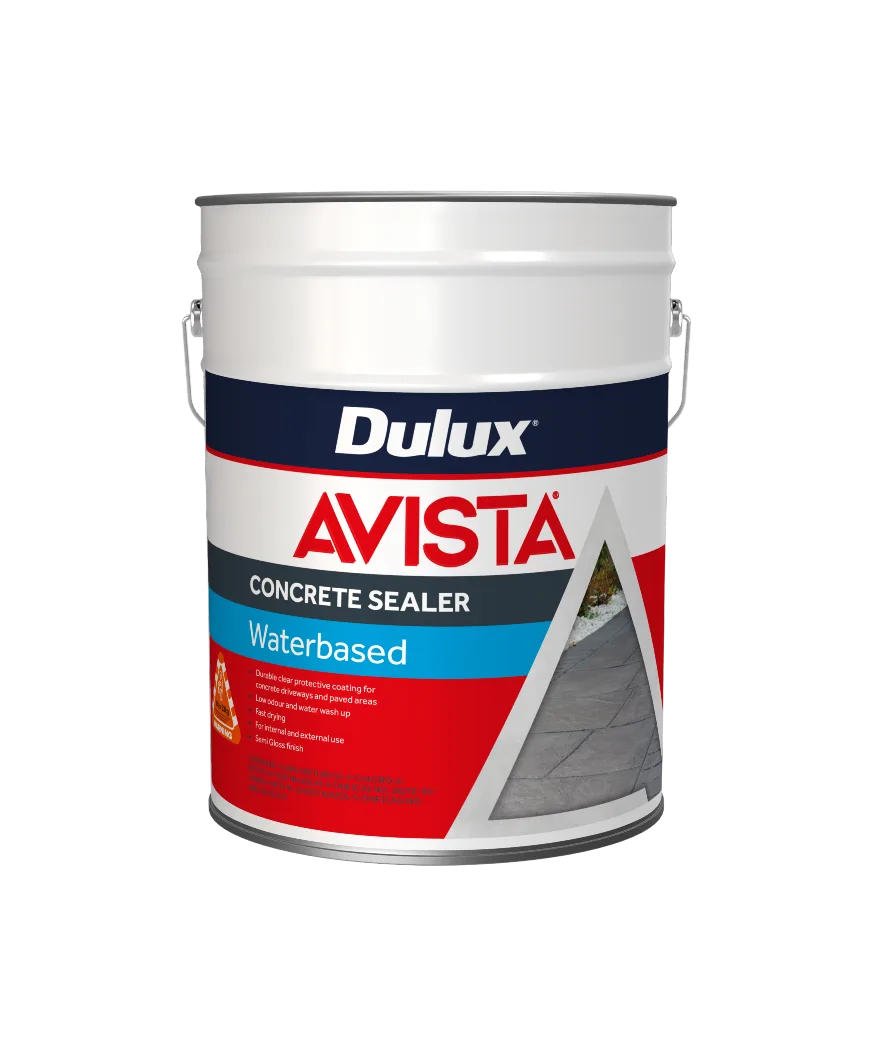

Dulux Avista Concrete Sealer Waterbased is a durable protective waterbased clear coating for all types of concrete surfaces. It provides a natural look finish & is suitable for both interior & exterior use.

Cleaning materials
Water
Application Tools
Air Spray, Airless Spray, Brush, Roller
Important note: Surfaces with a slope of 1:8 (1 metre fall across 8 metres of distance) or greater are not recommended for coating, even with the addition of Dulux Avista Slip Reducing Additive. Contact Dulux Avista for further advice.
Previously sealed concrete surfaces
A cross hatch test is required if the surface has been sealed more than 2 years ago to ascertain whether existing sealer is suitable to be resealed over.
1. Use a sharp blade to create a light “crosshatch” incision through the sealer.
2. Place a piece of self adhesive tape (suggest clear packing tape) over the incision.
3. Press firmly for maximum adhesion and remove sharply. Repeat with fresh tape several times. If sealer is present on the tape, it is advised the sealer be completely stripped from surface. Seek professional contractors should stripping be required. If there is no sign of sealer adhering to the tape or delaminating from the surface, this would indicate that the bond of the existing sealer is sufficient for resealing.
Important note: If existing sealer shows signs of whitening or blooming, regardless of cross hatch test results, sealer may need to be stripped completely from the surface. Whitening may reoccur if new coat of sealer is applied over this problem.
Cleaning
Concrete is to be clean and free of grease, oil and any other contaminants. A stiff broom and general purpose cleaner are recommended. Pressure clean at minimum 2000 psi to clean and remove all contaminants. Allow surface to dry before resealing (sealing over damp concrete will cause whitening).
Important note: if current sealer shows signs of whitening or blooming, regardless of cross hatch test results, sealer may need to be stripped completely from the surface. Whitening may reoccur if new coat of sealer is applied over this problem.
Preparation Instructions for New Cured and Old Concrete (unsealed)
Ensure concrete is sufficiently cured (recommended minimum 14 days). Concrete is to be clean and free of grease, oil, paint or any curing agent. Stiff broom and general purpose cleaner recommended. Any oil stains should be treated & cleaned with an industrial degreaser. Pressure clean surface at minimum 2000 psi and allow to dry. Acid etch with hydrochloric acid. Dilute approximately 20 parts water to 1 part acid (depending on porosity) to remove any loosely bound cement and laitance.
Note: smooth concrete will require a higher acid content. Maximum strength - 10 parts water to 1 part acid. Apply diluted acid to surface using a large head watering can, applying in a criss cross motion (approximately 5-10m² sections). Acid will start to fizz on the surface once it starts to react with the laitance in the concrete. Pressure clean immediately to clean and remove all remnants of acid (do not allow acid to dry on surface). Pressure clean at minimum 2000 psi. Allow surface to dry before sealing (sealing over damp concrete will cause whitening).
Sealer to be applied by a quality, 11mm-22mm nap synthetic or lambs wool roller. Nap used will depend on the profile of the concrete.
The sealer must be mixed prior to application using a stirrer or paddle. To apply sealer, pour sealer into a roller tray, and evenly roll a thin coat onto the surface.
Ensure sealer is not applied too thick and no pooling occurs as this may cause whitening due to moisture entrapment.
Sealer is milky white in appearance & will dry clear, provided it is not applied too thickly.
Avoid excess sealer build up on the edges of the roller. This can lead to roller lines in the surface.
An additional coat of sealer can be applied after a minimum of 2 hours, (recommended recoat 2 hours).