Exterior: Solutions for Paint Problems can help you identify, correct and prevent paint failures. Each subject illustrates and describes what a problem looks like, lists a possible cause of the failure and provides a solution. Many preventive measures are also given. Kindly supplied by The Paint Quality Institute.


Have you noticed small droplets appearing on your fresh coat of acrylic paint? This is known as 'surfactant leaching'. Don't panic - it's a normal part of the curing process.

Yellowing describes the development of a yellow cast in ageing paint solvent-based enamels.
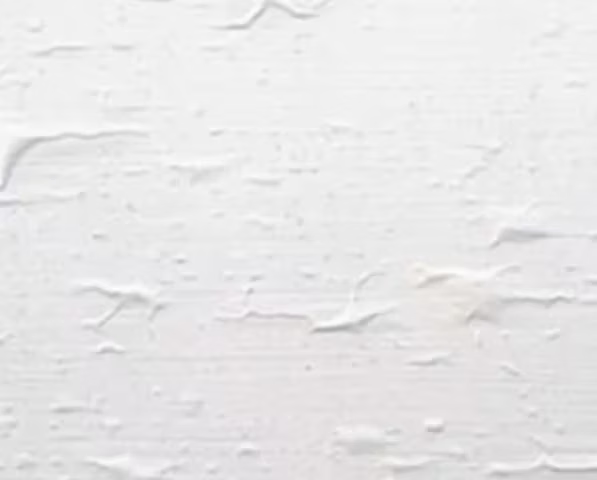
Wrinkling is a term to describe a rough, crinkled paint surface, which occurs when uncured paint forms a 'skin'.

Sagging is the downward "drooping" movement of the paint film immediately after application that results in an uneven coating.

Roller spattering is the tendency of a roller to throw off small droplets of paint during application.

Roller marks and stipple are the unintentional textured pattern left in the paint by the roller. Find out more.

Failure of the paint to resist absorption of dirt and stains.

Shiny spots or dull spots (also known as 'flashing') on a painted surface; uneven gloss.

Wearing away or removal of the paint film when scrubbed with a brush, sponge, or cloth.

Failure of dried paint to obscure or 'hide' the surface to which it is applied.

Poor flow and levelling is when paint fails to dry to a smooth film, resulting in unsightly brush and roller marks after the paint dries. For each problem you’ll find a guide to identifying it, its causes and solutions.

Picture framing occurs when a wall is painted with a roller, but is brushed at the edges and corners. The brushed areas generally appear darker, resembling the frame of a picture. For each problem you’ll find a guide to identifying it, its causes and solutions.

Deep, irregular cracks resembling dried mud in your paintwork is called mud cracking. For each problem you’ll find a guide to identifying it, its causes and solutions.

If you’ve noticed black, grey or brown areas on your painted surface, chances are you’re dealing with a mould problem.
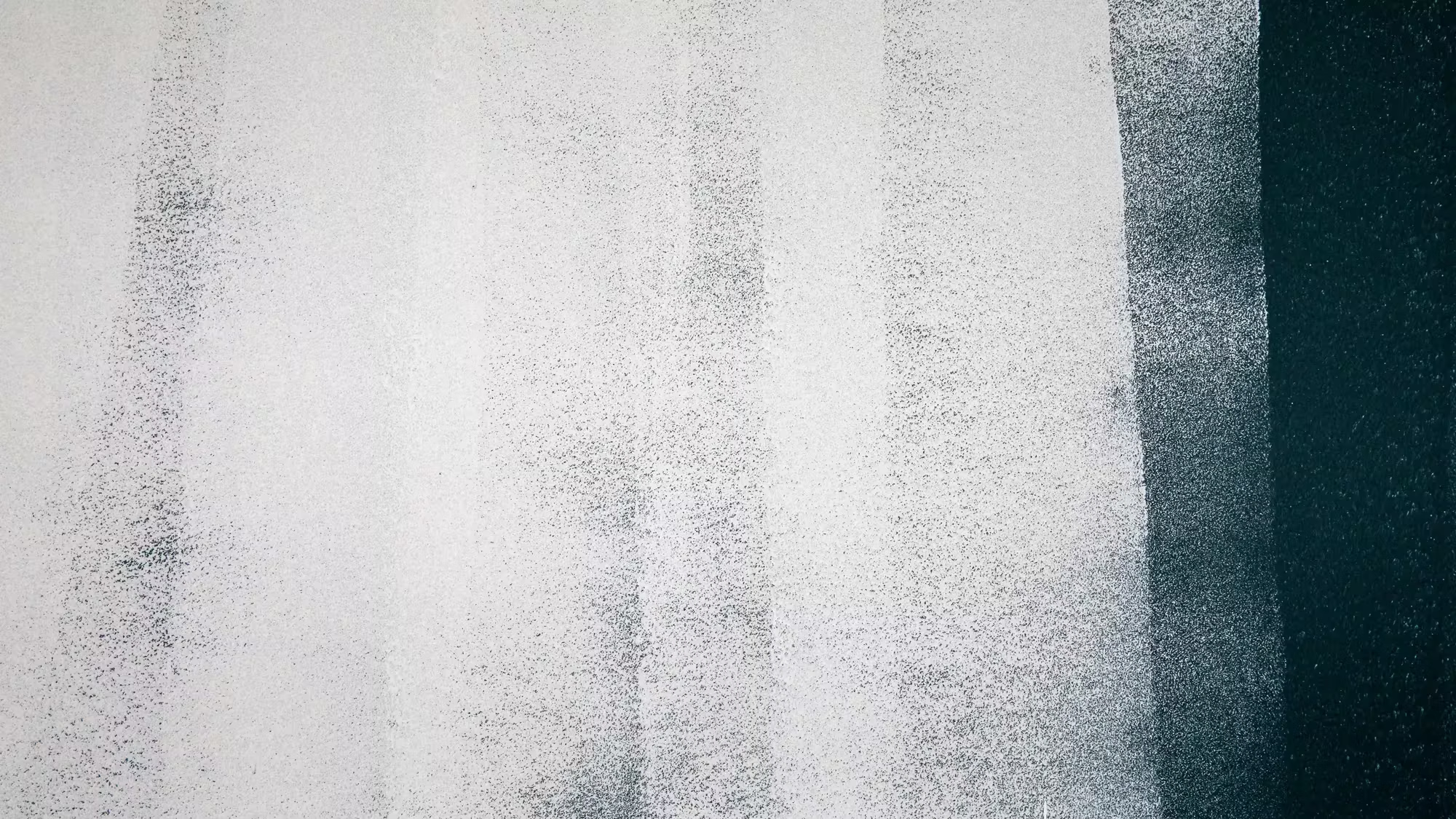
Have you noticed that there are areas of denser colour or higher gloss where wet and dry layers overlap during painting? For each problem you’ll find a guide to identifying it, its causes and solutions.

Foaming or cratering is the formation of bubbles (foaming) and resulting small, round concave depressions (cratering) in a paint film, during paint application and drying. For each problem you’ll find a guide to identifying it, its causes and solutions.

Cracking, flaking or peeling is the splitting of a dry paint film. This is a problem that needs fixing as it can lead to complete failure of the paint. For each problem you’ll find a guide to identifying it, its causes and solutions.

The gloss of paint can wear down when subjected to rubbing, scrubbing or having an object brush up against it. For each problem you’ll find a guide to identifying it, its causes and solutions.

Blocking is the undesirable sticking together of two painted surfaces when pressed together (e.g., a door sticking to the jamb). For each problem you’ll find a guide to identifying it, its causes and solutions.


